

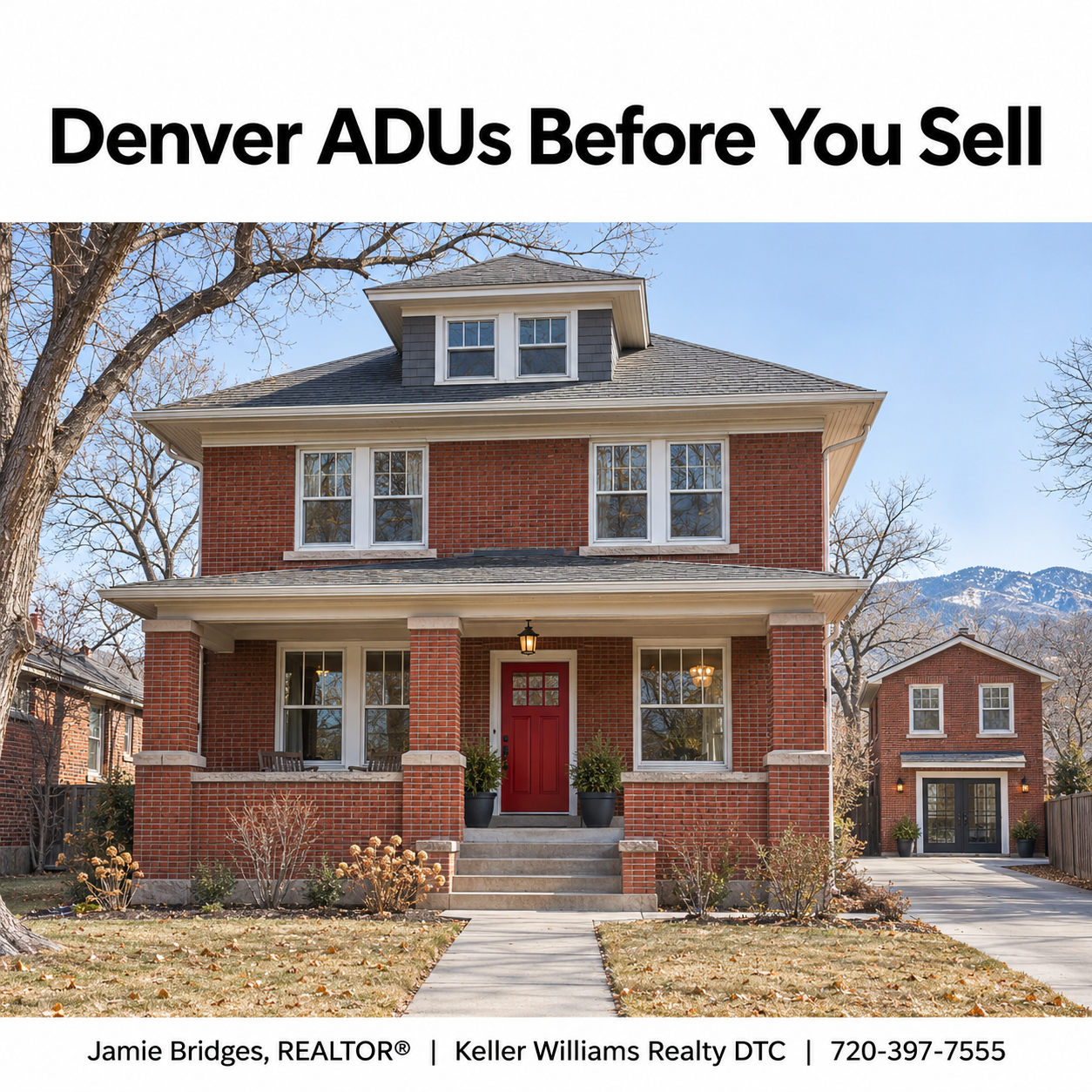
Can a backyard ADU add value to your Denver home before you sell?
It can, though building one just to sell rarely pencils out. Denver now allows ADUs in single-unit zone districts citywide, and the value shows up when a permitted, finished unit is already in place.
Here’s the math that catches Denver sellers off guard. A 2024 peer-reviewed study of Los Angeles found that an ADU raised a parcel’s selling price by 7% to 9%. For example, on a $700,000 Denver home, 7% is $49,000. Denverite has reported that a new ADU can cost more than $300,000 to build.
That gap doesn’t mean an ADU is a bad idea. It means the timing matters. A unit you’ll use for years and a unit you’re rushing to finish before a listing date are two different decisions.
This post covers what Denver’s ADU rules allow now, how lenders and appraisers treat an ADU, and when building one before you sell makes sense.
What Changed in Denver
On November 18, 2024, Denver City Council voted unanimously to allow accessory dwelling units in single-unit residential zone districts without a rezoning. The change took effect December 16, 2024, as Denverite reported. That followed a July 2023 update that replaced one-size-fits-all ADU standards with rules based on neighborhood context.
State law points the same direction. Colorado’s HB24-1152 required “subject jurisdictions” to allow one ADU as an accessory use to a single-unit detached home by June 30, 2025, through an administrative approval process without a public hearing. The Colorado Department of Local Affairs lists Denver as a subject jurisdiction. Under the law, a jurisdiction can’t require the ADU or the main house to stay owner-occupied, with limited exceptions, and can’t require an additional parking space for the ADU.
The Rules That Matter When You Sell
Denver’s ADU permit page sets out the basics:
- One per home. “Only one ADU is allowed per primary dwelling unit.”
- Size and placement vary. “The Denver Zoning Code regulates the height, size, and placement of ADUs,” and the standards differ by neighborhood context. Check the zoning code for your zone district before you plan anything.
- Owner at permit time. In single-unit zone districts, the owner must live in the main house when applying for permits, unless the house and ADU are built at the same time.
- Certificate of Occupancy. “A Certificate of Occupancy is required before the ADU can be lived in.”
- Short-term rentals. Short-term rentals of ADUs “are highly regulated in Denver and require licenses.” Denver ties short-term rentals to the operator’s primary residence, so a buyer can’t run the ADU as a nightly rental while living somewhere else.
One more point for sellers: Denver treats your home and ADU as one property. You sell them together.
How Lenders and Appraisers See an ADU
Your buyer’s loan shapes what the ADU is worth to them. The Fannie Mae Selling Guide, B2-3-04, treats a home with an ADU as a “one-unit property with an ADU” and states that “only one ADU is permitted on the parcel of the primary one-unit dwelling.” It also says an ADU “should always be considered legal if it is allowed under the current zoning code for the subject property.”
Rental income from an ADU counts toward a buyer’s qualifying income only under Fannie Mae’s specific rules. So a buyer may value the unit for its future rent while the lender gives it limited credit today.
Permits matter here. A finished unit with permits and a Certificate of Occupancy is far easier to appraise, insure, and disclose than a converted garage nobody signed off on. If your ADU was built without permits, tell your agent early and disclose what you know.
Building Before You Sell: The Honest Math
Building an ADU in Denver means zoning, building, and sewer permits, plus trade permits and inspections, before anyone can live in it. That’s months of work before you can list, plus the build cost.
Against that, the best published evidence on value comes from outside Colorado. The Los Angeles study found the 7% to 9% lift. Denver doesn’t have a published study of its own, so your home’s lot, alley access, and neighborhood comps decide what an ADU adds here.
Building before you sell tends to make sense when:
- You’ll own the home for years and use or rent the unit yourself first
- The ADU is already permitted and under construction
- Your comps show recent sales with permitted ADUs at a clear premium
It usually doesn’t when you plan to list within the next year and would be financing a full build to do it.
If You Already Have an ADU
You’re holding something buyers can’t add quickly. Gather these before you list:
- Permits, final inspections, and the Certificate of Occupancy
- Any lease and your Denver residential rental license, if the unit is rented long term
- Utility details: shared or separate meters, and sewer connection permits
- Floor plan and square footage of the unit
Your buyer’s lender will want to see that the ADU meets the zoning code, since Fannie Mae ties an ADU’s legal status to current zoning. With the permits in one folder, your listing agent can answer that question the first week the home is on the market.
Then describe the unit itself in the marketing: its kitchen, its entry, its square footage, its parking or alley access. Keep the description on the space itself and off who might live there.
Denver also has a program that funds ADUs in exchange for income-restricted rent. The Denver Housing Authority’s Single Family Plus program provides an average of $50,000 toward construction, and Denver7 reported in August 2026 that its funding is at risk. It’s a narrow fit for a seller, but it’s worth knowing about.
Working Through It With a Local Agent
Jamie Bridges, a REALTOR® with Keller Williams Realty DTC, holds the Seller Representative Specialist (SRS) and Pricing Strategy Advisor (PSA) designations and works with sellers across Denver, from Congress Park and Washington Park to Platt Park and University Park. Before you spend on an ADU, he pulls recent Denver sales with and without permitted units near your home so you can compare the likely price against the build cost and timeline.
This isn’t legal, zoning, or tax advice. Confirm your zone district’s standards with Denver Community Planning and Development.
Frequently Asked Questions
Does Denver allow ADUs in every neighborhood? Since December 16, 2024, Denver allows ADUs in single-unit residential zone districts without a rezoning. Height, size, and placement standards vary by zone district, so check the Denver Zoning Code for your lot.
Do I have to live on the property to build an ADU in Denver? In single-unit zone districts, Denver requires the owner to live in the main house when applying for ADU permits, unless both are built at the same time. State law bars an ongoing owner-occupancy requirement, with limited exceptions.
Can I rent my Denver ADU on Airbnb? Only with a short-term rental license, and Denver ties short-term rentals to the operator’s primary residence. A long-term rental of the ADU needs a Denver residential rental license.
The right call on an ADU starts with your timeline. Jamie Bridges is a REALTOR® with Keller Williams Realty DTC serving the Denver Metro Area and Summit County, Colorado. Call or text Jamie at 720-397-7555 to talk about your next move.
Sources: City and County of Denver, Community Planning and Development, ADU Permits, accessed November 13, 2026; Colorado Department of Local Affairs, Accessory Dwelling Units (HB24-1152), accessed November 13, 2026; Denverite, November 18, 2024; Fannie Mae Selling Guide B2-3-04, dated November 4, 2026; Brueckner and Thomaz, Real Estate Economics, 2024, vol. 52(3); Denver Housing Authority, June 6, 2023; Denver7, August 31, 2026. General information only. This isn’t legal, zoning, or tax advice.