
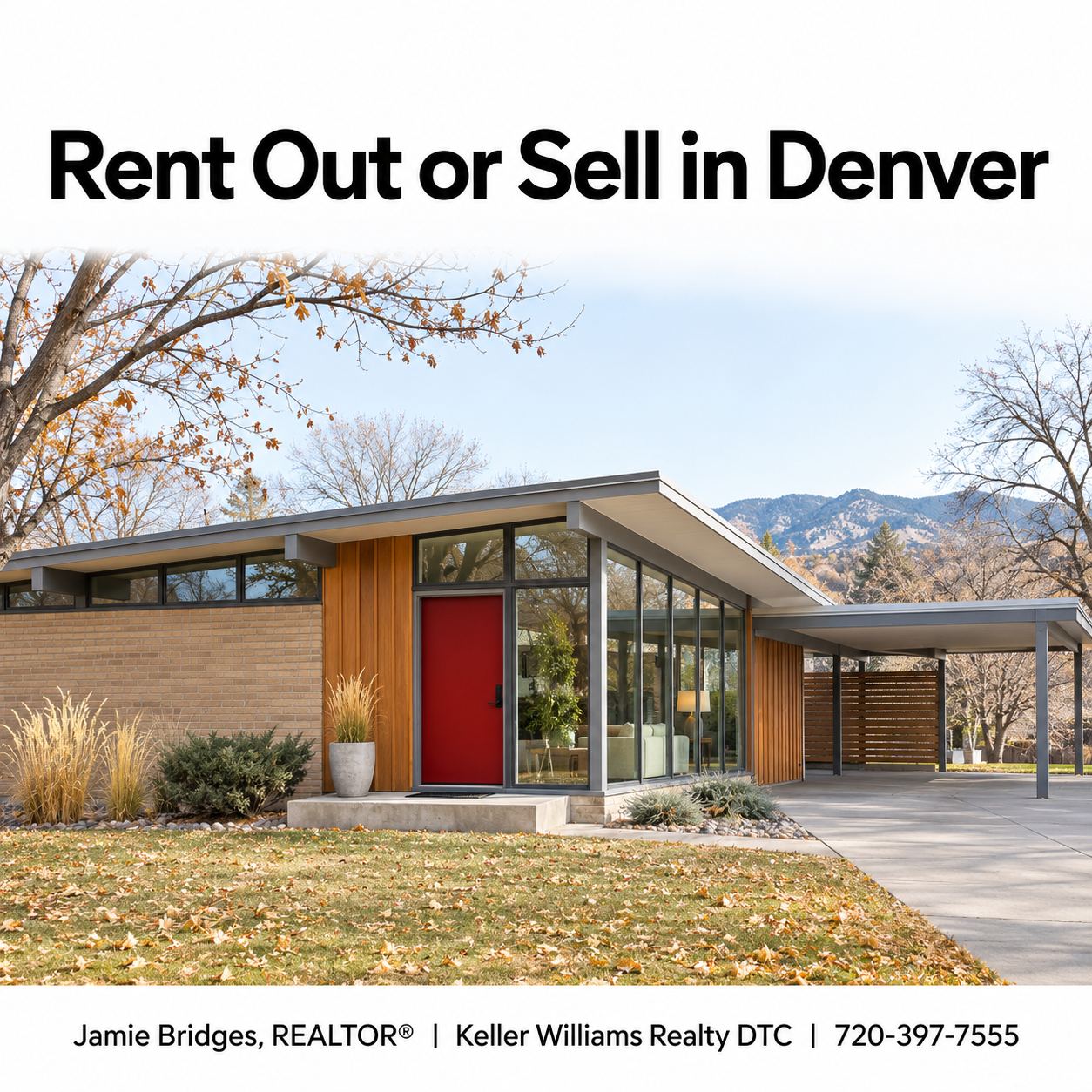
Should you rent out your Denver house instead of selling?
Only after you’ve priced in the rules. Renting your Denver home brings a city rental license, Colorado’s for-cause eviction law, and a tax clock on your capital gains exclusion that starts the day you move out.
For example, say you and your spouse have $300,000 of gain in the Denver home you’re leaving. Sell while you still meet the IRS ownership and use tests, and the $500,000 exclusion for married couples filing jointly can cover all of it. Rent the house long enough that you no longer meet the use test, and that same gain can become taxable.
That’s the part of the rent-or-sell decision most owners miss. The monthly rent check is easy to picture. The tax clock, the license, and the tenant law are what decide whether renting works for you.
This post covers the capital gains timing, Denver’s rental license, the Colorado tenant rules that matter if you sell later, and a short worksheet to help you decide.
The Tax Clock Starts When You Move Out
IRS Publication 523 sets the test for excluding gain on a home sale. You generally qualify if you “owned the home for at least 24 months (2 years) out of the last 5 years leading up to the date of sale” and “used it as your residence for at least 24 months of the previous 5 years.” Single filers “may exclude the first $250,000 of gain,” and the exclusion “is increased to $500,000 for a married couple filing jointly.”
Because the use test looks back five years, a home you lived in for two years can often be rented for up to about three years and still pass it. Past that point, you may lose the exclusion.
Depreciation follows you too. Publication 523 says you “can’t exclude the part of your gain equal to any depreciation allowed or allowable.” That means depreciation you could have claimed while the house was a rental counts, even if you never took it.
Rental periods and depreciation get specific quickly. Have a CPA run your numbers before you sign a lease.
Denver Requires a Rental License
Renting a Denver house long term needs a city license. Denver’s residential rental property license page states that a license “is required for anyone offering, providing, or operating a residential rental property for 30 days or more.”
- Single-unit properties require an inspection.
- The application fee is $50, and the license fee is $50 for a single dwelling unit.
- Licenses are valid for four years, and “it is unlawful to operate with an expired license.”
Budget the inspection and any repairs it turns up before your first tenant moves in.
Colorado Tenant Law and Selling Later
If you rent now and sell later, Colorado’s for-cause eviction law shapes your timeline. HB24-1098, effective April 19, 2024, requires a landlord to have a listed reason to end most tenancies once a tenant has been in the home for at least twelve months.
Selling is one of the allowed no-fault reasons. The law lists “withdrawal of the residential premises from the rental market for the purpose of selling the residential premises,” and most no-fault reasons require at least ninety days’ written notice. Moving back in yourself is also an allowed reason under certain conditions.
Other Colorado rules apply the whole time you’re a landlord:
- Habitability. Under C.R.S. 38-12-503, the landlord is deemed to warrant that the home “is fit for human habitation,” and that warranty can’t be waived.
- Security deposits. Starting January 1, 2026, deposits must be returned within thirty days, and landlords can’t deduct for normal wear and tear.
You can also sell with a tenant in place. The guide to selling a Denver rental with tenants covers leases, notice, and showings.
A Nightly Rental Isn’t the Workaround
Some owners plan to rent the house short term instead. In Denver, that usually doesn’t work once you’ve moved out. Denver ties short-term rental licenses to the host’s primary residence, which the city’s short-term rental FAQ defines as “the place in which a person’s habitation is fixed for the term of the license and is the person’s usual place of return.” A house you no longer live in doesn’t meet that test.
Your Insurance Changes Too
A standard homeowners policy is written for a home you live in. Once you rent the house, you’ll need a landlord or dwelling policy. The Insurance Information Institute says landlord policies cover the structure, include liability coverage, and in most cases cover lost rental income, and that they “generally cost about 25 percent more than a standard homeowners policy.” Call your agent before the lease starts.
A Hold-or-Sell Worksheet
Work through these before you decide:
- When did you move out, or when will you? Count forward three years and note that date.
- How much gain do you have, and does the exclusion cover it today? Ask a CPA.
- Who will manage the house? Repairs, the license, the inspection, and tenant calls all land on you or a manager you pay.
- Do you need the equity for your next purchase? Money tied up in a rental can’t go toward a down payment.
- What would selling later take? At least ninety days’ notice for most tenancies past twelve months, plus showings with a tenant in place.
- What happens to your next purchase? If you plan to buy again, ask your lender how a rental property and its income would be counted on your application.
- What rent can the house support? A licensed property manager can give you rent figures. Pair them with the license, insurance, and repair costs above.
Working Through It With a Local Agent
Jamie Bridges, a REALTOR® with Keller Williams Realty DTC, holds the Seller Representative Specialist (SRS) designation and works with sellers across Denver and the Denver Metro, from Englewood and Littleton to Centennial and Aurora. He can prepare a net sheet showing what you’d walk away with if you sold your Denver house today, so you can set it next to the rental numbers from your CPA and property manager.
This isn’t tax or legal advice. Talk with a CPA about your gain and a Colorado attorney about your duties as a landlord.
Frequently Asked Questions
How long can I rent out my house and still avoid capital gains tax? IRS Publication 523 requires that you owned and lived in the home for at least two of the five years before the sale. If you lived there two years, that often leaves about three years to rent and still qualify. Gain equal to depreciation allowed or allowable can’t be excluded.
Do I need a license to rent out my house in Denver? Yes. Denver requires a residential rental property license for rentals of 30 days or more. Single-unit properties need an inspection, and licenses last four years.
Can I sell my Denver house if a tenant lives there? Yes. You can sell with the tenant in place, or end the tenancy to sell. Under Colorado’s HB24-1098, selling is an allowed no-fault reason for tenancies past twelve months, with at least ninety days’ written notice in most cases.
The rent check is only one line of the math. Jamie Bridges is a REALTOR® with Keller Williams Realty DTC serving the Denver Metro Area and Summit County, Colorado. Call or text Jamie at 720-397-7555 to talk about your next move.
Sources: IRS Publication 523, Selling Your Home (2025); City and County of Denver, Residential Rental Property License and Short-Term Rental FAQ, accessed November 13, 2026; Colorado General Assembly, HB24-1098, effective April 19, 2024; C.R.S. 38-12-503 and 38-12-103 (as amended by HB25-1249, effective January 1, 2026); Insurance Information Institute, Coverage for Renting Out Your Home, accessed November 13, 2026. General information only. This isn’t tax or legal advice.